

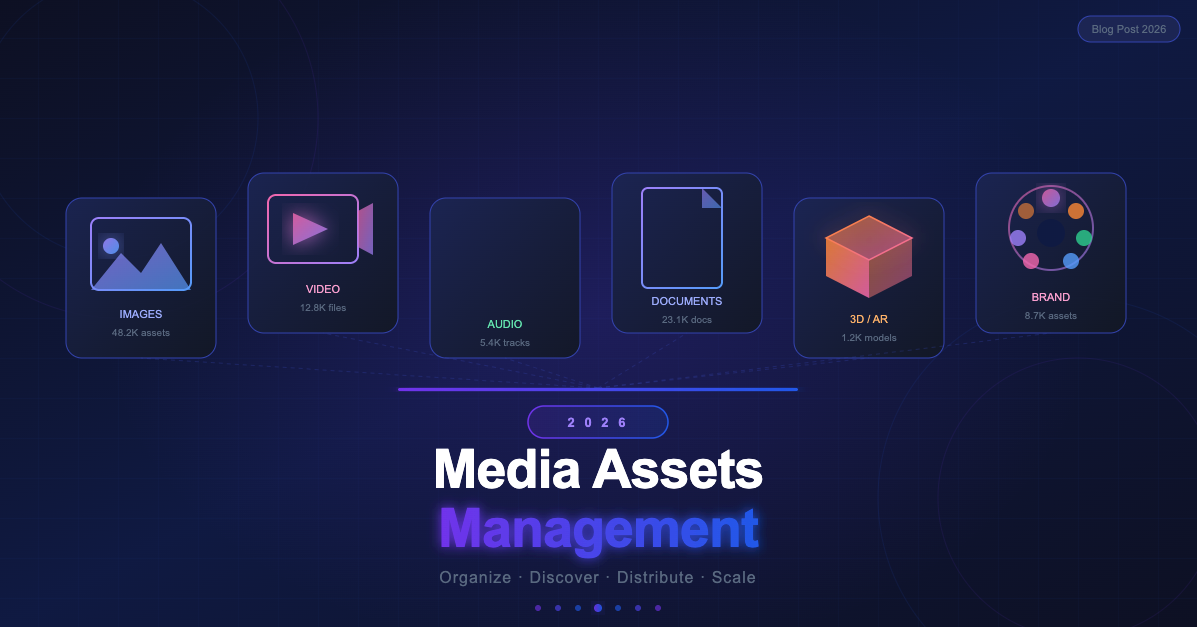
The media asset management landscape has undergone a fundamental transformation. What began as a tool for photographers to organize image libraries has evolved into mission-critical infrastructure that powers content operations across entire organizations. In 2026, the question is no longer whether you need a Digital Asset Management (DAM) system—it's how strategically you're deploying one.
The Market Reality
The numbers tell a compelling story. The global DAM market reached $6.29 billion in 2026 and is projected to nearly quadruple to $19.36 billion by 2034, growing at a 15.1% compound annual rate. This isn't speculative growth—it reflects the fundamental shift in how organizations create, manage, and distribute content.
Media and entertainment still commands the largest share at 41.37%, but the fastest growth is coming from e-commerce and retail. Meanwhile, sales and marketing teams account for over a third of DAM usage as they seek consistent brand assets across ads, landing pages, and partner channels.
Perhaps most telling: nearly 60% of new DAM requirements now come from businesses with fewer than 20 seats. Asset management is no longer an enterprise-only concern.
AI Has Moved Beyond Hype
For years, we heard promises about AI transforming asset management. In 2026, those promises have materialized into measurable outcomes:
- 35% faster time to market for marketing teams using AI-enabled DAM
- 67% improvement in brand compliance through automated enforcement
- Up to 50% reduction in administrative workloads through intelligent automation
- ROI ratios between 8:1 and 14:1 from well-implemented DAM systems
The key shift is purposeful AI deployment. Organizations have moved past implementing AI simply to have AI. Today's implementations focus on specific business goals: enriching content with intelligent metadata, identifying compliance risks early, and automating repetitive workflows that once consumed creative teams.
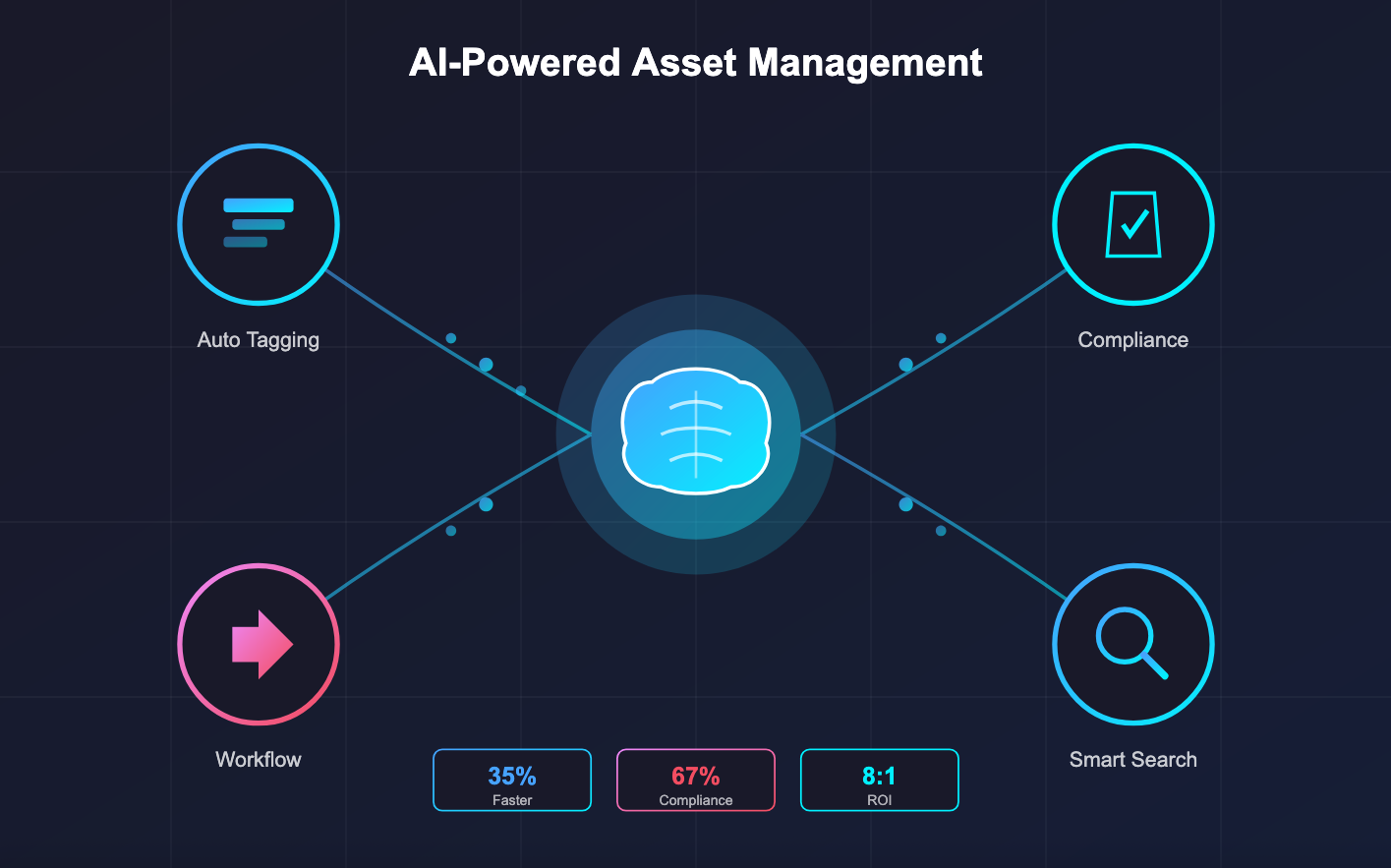
AI agents have become particularly critical for enterprise teams. Three-quarters of organizations with more than 50 contributor seats now consider AI agents essential for maintaining consistent metadata, understanding team-specific vocabulary, and automatically applying appropriate tags. These agents don't just tag—they learn from historical workflows to make increasingly intelligent decisions about routing, categorization, and follow-up actions.
The Content Authenticity Imperative
The explosion of generative AI has created an unexpected challenge: proving what's real. When anyone can generate photorealistic images and video, establishing provenance becomes essential for maintaining trust.
This has elevated content authenticity from a nice-to-have to a differentiating feature. The C2PA (Coalition for Content Provenance and Authenticity) standard has emerged as the industry response—essentially a "nutrition label" for digital files that tracks a content's history from creation through editing to export.
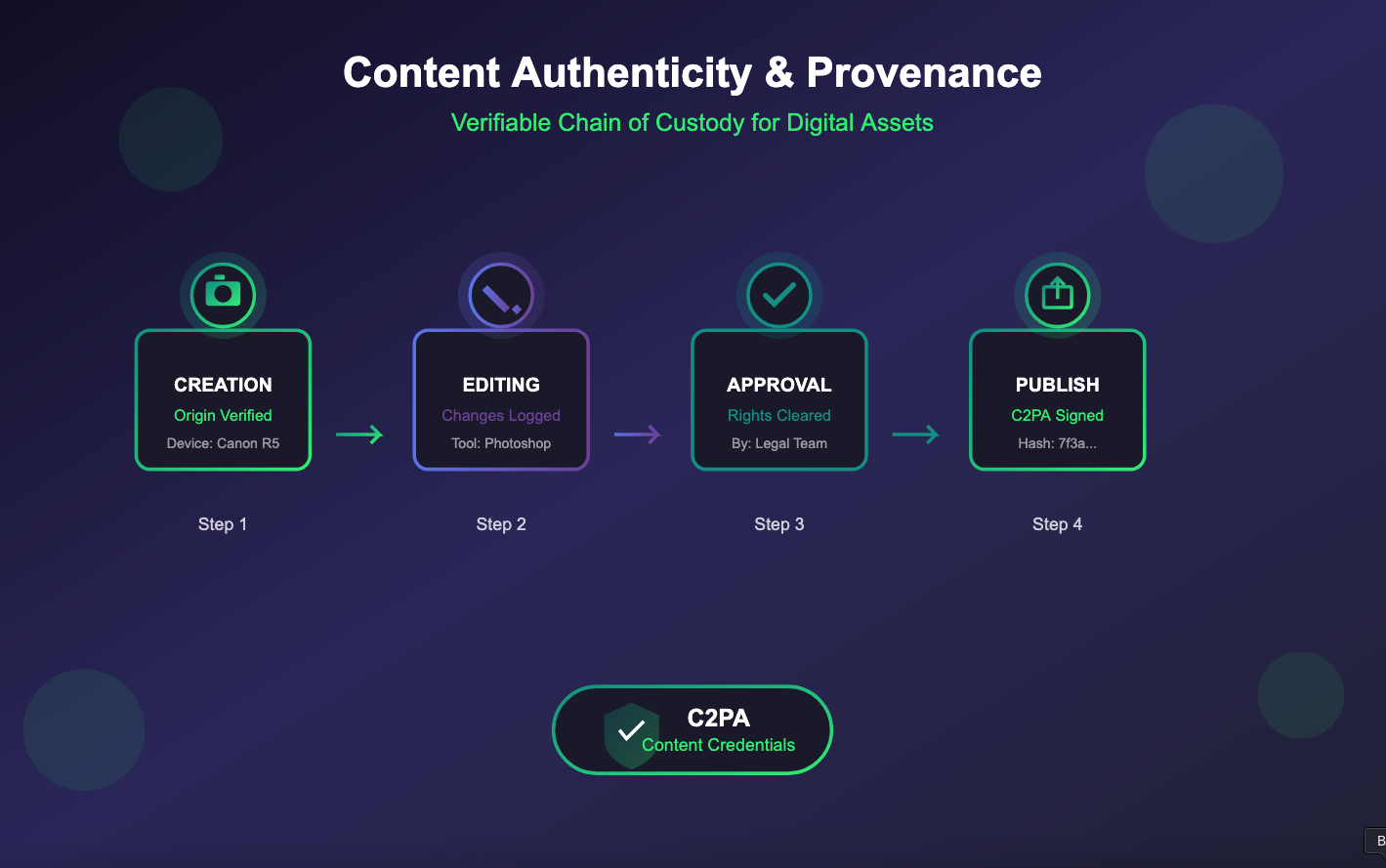
Leading DAM providers have begun embedding C2PA support, enabling organizations to maintain verifiable chains of custody for their assets. For industries where authenticity matters—news media, legal, healthcare, financial services—this capability has become non-negotiable.
Governance at Scale
With 69% of teams citing governance and access controls as critical compliance enablers, DAM has become central to navigating an increasingly complex regulatory landscape. GDPR, HIPAA, and region-specific content regulations require organizations to maintain precise control over who can access what, where, and when.
The response has been AI-assisted compliance workflows. Rather than bottlenecking content production with manual legal and brand reviews, organizations now embed automated pre-checks earlier in the creation process. Systems can flag potential issues—expired rights, restricted usage, brand inconsistencies—before content moves downstream.
This isn't about replacing human judgment. It's about ensuring that human reviewers focus on genuine edge cases rather than catching obvious violations that algorithms handle reliably.
The Connected Content Supply Chain
Perhaps the most significant evolution is DAM's transformation from a system of record to a system of action. Modern platforms don't just store assets—they orchestrate content flows across the entire technology stack.
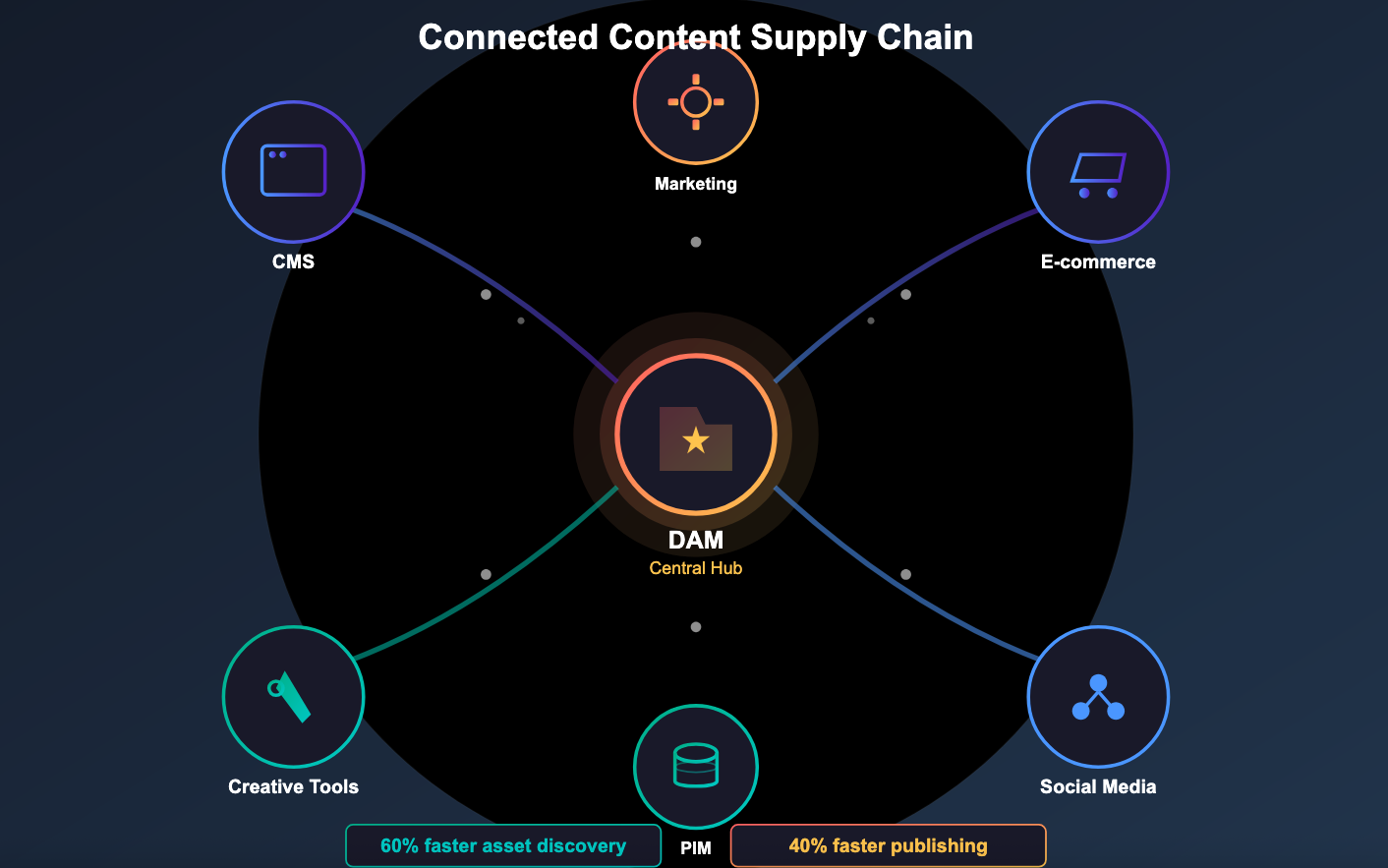
Integration has become table stakes. DAM platforms now connect seamlessly with:
- Content management systems for web publishing
- Product information management for e-commerce
- Marketing automation for campaign execution
- Creative tools for asset production
- Social media platforms for distribution
The result is a connected content supply chain where assets flow automatically between systems without manual downloads, uploads, or reformatting. Organizations report finding assets up to 60% faster and accelerating campaign publishing by up to 40%.
Sustainability Enters the Conversation
A surprising entrant to the DAM discussion: environmental sustainability. With 75% of organizations expected to implement IT infrastructure sustainability programs by 2027 according to Gartner, the ecological footprint of digital operations has come under scrutiny.
DAM contributes to sustainability by reducing digital waste. When organizations centralize assets in a single source of truth, they eliminate the duplication, redundant storage, and unnecessary processing that occurs when assets scatter across email attachments, local drives, and disconnected systems.
It's a modest contribution, but it reflects how DAM has become woven into broader organizational priorities beyond marketing efficiency.
Looking Ahead
The transformation of media asset management mirrors a larger shift in how organizations think about content. Digital assets are no longer just marketing materials—they're strategic resources that support sales, customer service, training, product documentation, and partner enablement.
The organizations gaining competitive advantage aren't just implementing DAM systems. They're treating content infrastructure with the same strategic importance as their financial systems or customer databases. In 2026, your assets deserve nothing less.
This post was written to explore the current state of media asset management. For organizations evaluating DAM solutions, the key question isn't features—it's how deeply the platform integrates with your existing workflows and future content strategy.


