

Introduction
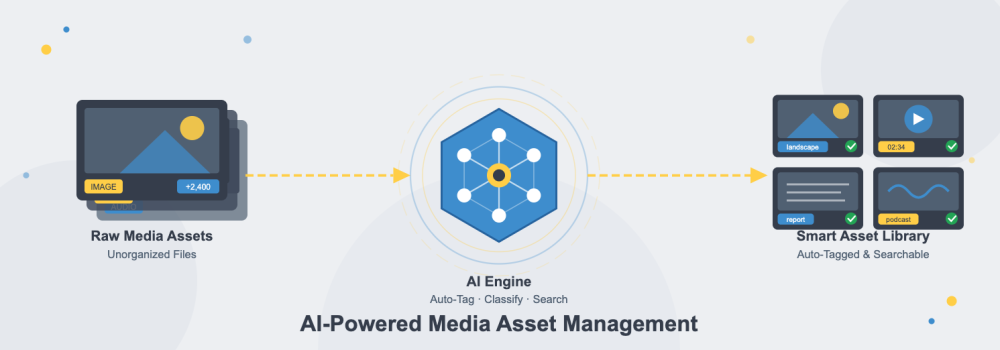
The media and entertainment industry generates an enormous volume of digital content every day — videos, images, audio files, graphics, and documents. Managing these assets efficiently has long been a challenge for organizations of all sizes. Enter artificial intelligence (AI): a transformative force that is redefining how media asset management (MAM) platforms operate, helping teams organize, discover, and deliver content faster than ever before.
 AI-Powered MAM
What Is Media Asset Management?
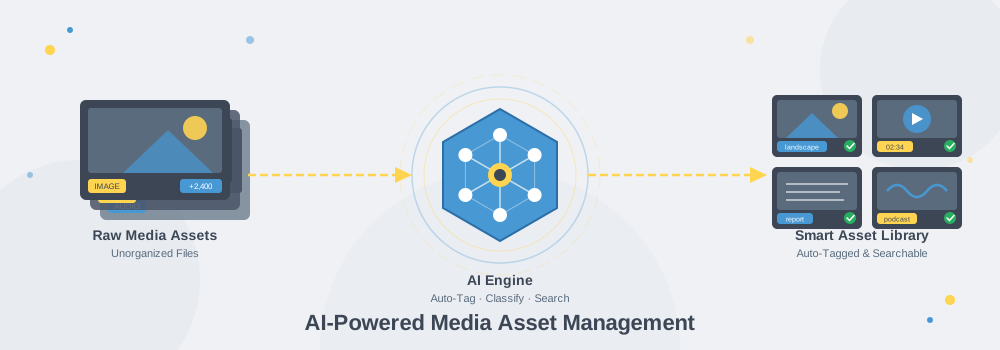
Media Asset Management refers to the systems and processes used to store, organize, retrieve, and distribute digital media files. A robust MAM platform acts as a centralized hub where creative teams, marketers, and broadcasters can access the right asset at the right time. Traditionally, this relied on manual tagging, folder structures, and keyword searches — a time-consuming and error-prone process.
How AI Is Changing the Game

1. Automated Metadata Tagging
One of the most significant ways AI is revolutionizing MAM is through automated metadata generation. AI-powered computer vision and natural language processing (NLP) models can analyze images and videos to automatically generate descriptive tags — identifying objects, scenes, faces, emotions, colors, and even spoken words in audio tracks. This dramatically reduces the time teams spend on manual cataloging and ensures consistent, searchable metadata across thousands of assets.
2. Intelligent Search and Discovery
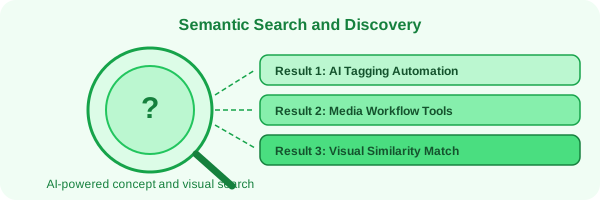
Traditional keyword-based search often falls short when dealing with large media libraries. AI enables semantic search capabilities, allowing users to search by concept, mood, or visual similarity rather than just exact keyword matches. For example, a user can search for "outdoor scenes with warm lighting" and receive accurate results — even if those specific words never appeared in any manual tag.
3. Automated Content Moderation
AI models can automatically scan content for compliance issues, brand guideline violations, or inappropriate material before assets are published or shared. This is especially valuable for organizations managing large volumes of user-generated content or working in regulated industries where content standards are critical.
4. Smart Transcription and Captioning
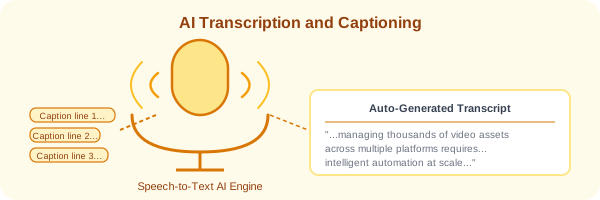
AI-powered speech-to-text engines can automatically transcribe audio and video content, generating accurate captions and subtitles at scale. This not only improves accessibility and SEO but also makes video content fully searchable by its spoken content — a powerful capability for media archives and broadcast libraries.
5. Personalized Content Delivery
AI algorithms analyze viewer behavior and preferences to recommend the most relevant assets for different audiences. For content publishers and streaming platforms, this means better engagement, longer watch times, and improved audience retention — all driven by intelligent automation rather than manual curation.
6. Duplicate Detection and Storage Optimization
AI can identify near-duplicate or visually similar assets across a media library, helping teams eliminate redundancy, reduce storage costs, and maintain a clean, organized repository. This is particularly useful after mergers, rebranding campaigns, or when consolidating multiple legacy archives.
The Benefits for Modern Media Teams
The integration of AI into MAM platforms brings measurable benefits across the board. Creative teams spend less time searching and more time creating. Operations teams gain better visibility and control over their asset inventory. Marketing teams can repurpose and distribute content more efficiently. And executives gain confidence that their digital assets are protected, organized, and always discoverable.
Looking Ahead
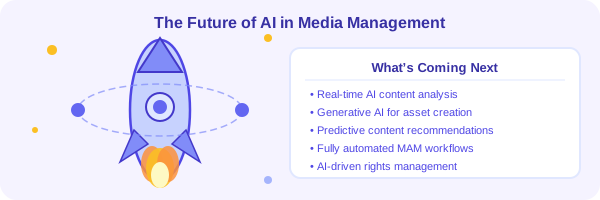
As AI technology continues to evolve, the capabilities of media asset management platforms will only grow. Features like real-time content analysis, generative AI for asset creation, predictive content recommendations, and fully automated workflows are already emerging. Organizations that embrace AI-powered MAM today will be well-positioned to scale their content operations and stay competitive in an increasingly digital-first world.
Conclusion
AI is not just an enhancement to media asset management — it is fundamentally redefining what is possible. From automated tagging and intelligent search to smart delivery and compliance automation, AI-powered MAM platforms like Publit.io are empowering teams to work smarter, move faster, and get more value from their digital content. The future of media management is intelligent, and it is already here.


