

The Evolving Landscape of Digital Rights Management in 2026
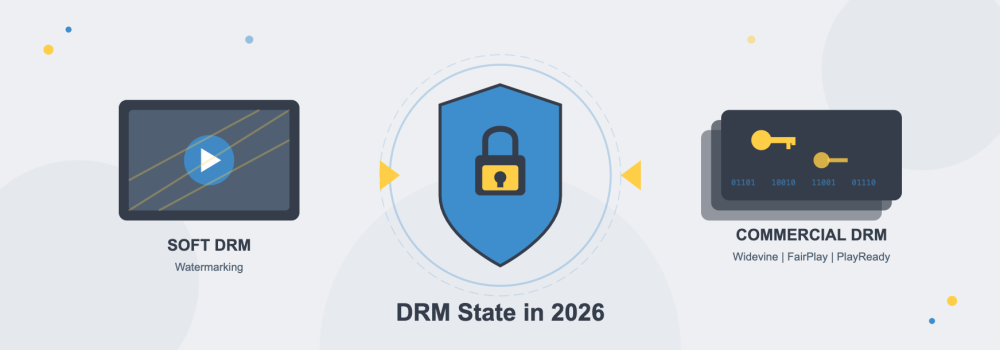
As we navigate through 2026, the digital content industry continues to grapple with one of its most persistent challenges: protecting intellectual property while maintaining seamless user experiences. The DRM (Digital Rights Management) landscape has undergone significant transformations, with two distinct approaches emerging as frontrunners: Soft DRM and Commercial DRM systems.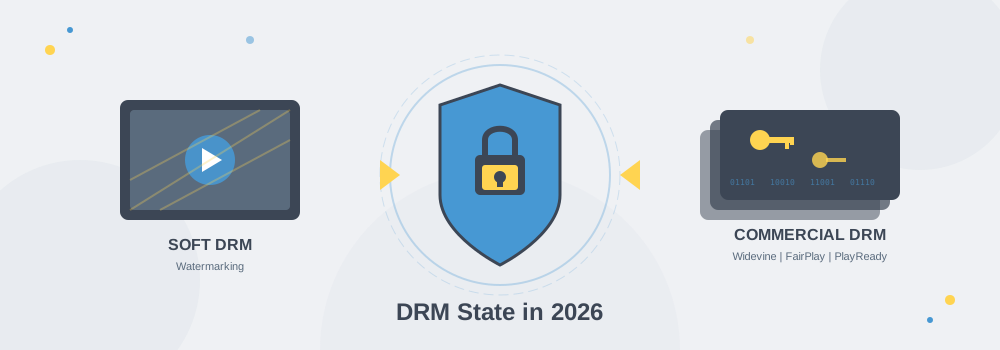
Understanding the DRM Spectrum
Before diving into the specifics, it's essential to understand that DRM exists on a spectrum. On one end, we have lightweight, user-friendly solutions; on the other, fortress-like commercial systems designed for maximum security. The choice between them often comes down to balancing security needs against user experience and implementation costs.
Soft DRM: The User-Friendly Approach
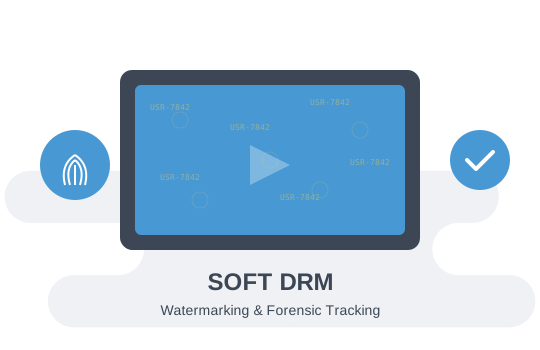
Soft DRM, sometimes called "social DRM" or "watermarking," represents a philosophy that prioritizes user convenience while maintaining basic content protection. Here's what defines soft DRM in 2026:
Key Characteristics
- Invisible Watermarking: Content is embedded with unique identifiers tied to the purchaser, enabling tracing without restricting usage
- No Device Restrictions: Users can access content on unlimited devices without authentication headaches
- Format Flexibility: Content isn't locked to proprietary formats or players
- Offline Access: Full functionality without constant internet connectivity
- Forensic Tracking: If content leaks, the source can be identified and traced
Advantages of Soft DRM
- Superior User Experience: No frustrating license errors, device limits, or authentication failures
- Lower Implementation Costs: No licensing fees to DRM providers or complex infrastructure requirements
- Future-Proof: Content remains accessible even if the DRM provider goes out of business
- Reduced Support Overhead: Fewer user complaints and technical issues
- Cross-Platform Compatibility: Works seamlessly across all devices and operating systems
Limitations
- Easier to Circumvent: Determined pirates can strip watermarks, though this requires effort
- Post-Hoc Protection: Primarily useful for tracing leaks rather than preventing them
- Not Suitable for All Content: High-value premium content may require stronger protection
Commercial DRM Systems: The Industry Standard
Commercial DRM solutions like Google Widevine, Apple FairPlay, and Microsoft PlayReady continue to dominate the streaming and premium content landscape in 2026. These systems have evolved significantly, offering multi-layered protection: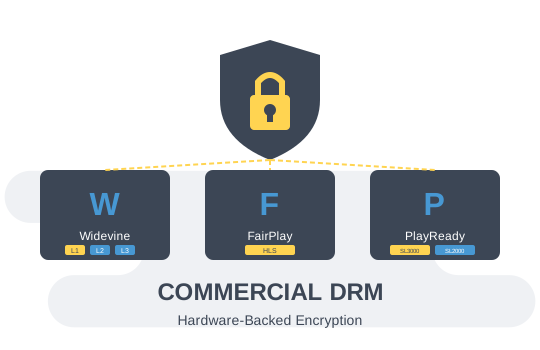
Key Characteristics
- Hardware-Level Security: Leverages Trusted Execution Environments (TEE) in modern devices
- Encryption Standards: AES-128/256 encryption with secure key exchange protocols
- License Management: Sophisticated systems controlling playback duration, quality levels, and device limits
- Real-Time Protection: Active monitoring and response to tampering attempts
- Multi-Key Encryption: Different encryption keys for different quality levels (SD, HD, 4K, HDR)
The Big Three in 2026
Google Widevine
- Three security levels (L1, L2, L3) based on hardware capabilities
- Dominant in Android ecosystem and Chrome browsers
- L1 required for HD/4K content on most platforms
- 2026 updates include improved attestation and faster license acquisition
Apple FairPlay
- Tight integration with Apple ecosystem (iOS, tvOS, macOS)
- Supports HLS streaming with SAMPLE-AES encryption
- Required for content delivery on Apple devices
- Enhanced in 2026 with spatial audio and Vision Pro support
Microsoft PlayReady
- Strong presence in Windows, Xbox, and smart TV ecosystems
- SL3000 (hardware-backed) and SL2000 (software) security levels
- Widely adopted by cable and satellite providers
- 2026 improvements focus on cloud-native deployment
Advantages of Commercial DRM
- Industry Compliance: Meets studio requirements for premium content (Hollywood majors, major sports leagues)
- Proven Security: Battle-tested against sophisticated piracy operations
- Ecosystem Support: Native support across billions of devices
- Granular Control: Fine-tuned license policies for different markets and use cases
- Legal Standing: DMCA and international law provide additional protection
Challenges
- Licensing Costs: Per-device or per-stream fees can be substantial
- Implementation Complexity: Requires significant technical expertise and infrastructure
- User Friction: Device limits, authentication issues, and compatibility problems persist
- Platform Lock-In: Content often tied to specific ecosystems
- Not Impenetrable: High-profile breaches still occur (L3 Widevine compromises, for instance)
The 2026 Hybrid Approach
Many content providers are now adopting a hybrid strategy that combines elements of both approaches: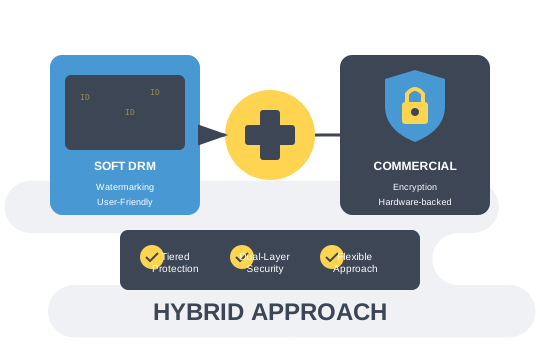
- Tiered Protection: Soft DRM for lower-value content, commercial DRM for premium releases
- Watermarking + Encryption: Using forensic watermarks alongside encryption for dual-layer security
- Geographic Flexibility: Different DRM approaches for different markets based on piracy rates
- Time-Based Degradation: Strong DRM during release windows, transitioning to soft DRM for catalog content
Emerging Trends Shaping DRM in 2026
1. AI-Powered Piracy Detection
Machine learning algorithms now scan the web in real-time, identifying pirated content within minutes of upload. This shifts the protection model from prevention-only to rapid response.
2. Blockchain-Based Rights Management
Decentralized ledgers are being explored for transparent royalty distribution and ownership verification, though mainstream adoption remains limited.
3. WebAssembly DRM
Browser-based DRM implementations using WebAssembly offer improved security for web-delivered content without plugin dependencies.
4. Zero-Trust Content Delivery
Every access request is verified, regardless of device or user history, reducing the attack surface for credential sharing.
5. CDM Evolution
Content Decryption Modules are becoming more sophisticated, with hardware-backed attestation becoming the norm rather than the exception.
Making the Right Choice for Your Content
The decision between soft DRM and commercial DRM should be guided by:
| Factor | Soft DRM Recommended | Commercial DRM Recommended |
|---|---|---|
| Content Value | E-books, educational materials, indie content | Premium movies, live sports, exclusive series |
| Audience Size | Niche, engaged communities | Mass market distribution |
| Budget | Limited resources | Enterprise-level investment |
| User Experience Priority | Frictionless access critical | Security trumps convenience |
| Distribution Channels | Direct sales, small platforms | Major streaming services, broadcasters |
| Content Lifecycle | Long-tail, evergreen content | Time-sensitive, release-window focused |
The Future Outlook
As we look beyond 2026, several developments are likely to reshape the DRM landscape:
- Convergence: The line between soft and commercial DRM will continue to blur as hybrid solutions mature
- User Expectations: Growing demand for seamless, cross-platform experiences will pressure providers to reduce friction
- Regulatory Impact: Right-to-repair and digital ownership legislation may force DRM systems to adapt
- AI Arms Race: Both protection and circumvention will increasingly leverage artificial intelligence
- Interoperability Standards: Industry efforts toward unified DRM standards continue, though progress is slow
Conclusion
The state of DRM in 2026 reflects a maturing industry that recognizes there's no one-size-fits-all solution. Soft DRM offers an attractive option for content creators who prioritize user experience and cost efficiency, while commercial DRM remains essential for high-value content requiring maximum protection.
The most successful content providers are those who thoughtfully match their protection strategy to their specific content, audience, and business model rather than defaulting to either extreme. As the technology continues to evolve, this nuanced approach will only become more important.
Whether you're protecting the next blockbuster film or distributing educational content to students worldwide, understanding the strengths and limitations of each approach empowers you to make informed decisions that balance security, user experience, and business sustainability.
Looking to implement DRM for your video content? Publitio offers flexible media management solutions with built-in protection options. Explore our plans to find the right fit for your needs.


