


The Best Cloudinary Alternative in 2026: Why Publitio Is Worth Switching To
If you've been searching for a reliable Cloudinary alternative, you're not alone. While Cloudinary has long been a household name in media management, thousands of developers, content teams, and growing businesses are reconsidering their options in 2025. Whether it's the steep pricing tiers, the complexity of the platform, or simply the need for a more developer-friendly solution with better video capabilities, the search for something better is real — and Publitio delivers exactly that.
In this post, we'll break down why Publitio stands out as the top Cloudinary alternative, compare the key features side by side, and help you decide whether making the switch is the right move for your team.
Why Developers and Teams Are Looking for a Cloudinary Alternative
Cloudinary is undeniably powerful, but it comes with trade-offs that are hard to ignore as your business scales:
- Pricing that grows fast: Cloudinary's credit-based pricing model can be unpredictable. As your media library grows and traffic increases, costs can escalate quickly and without much transparency.
- Video hosting limitations: While Cloudinary handles images well, its video streaming capabilities — especially around adaptive HLS streaming, DRM, and video-on-demand — are either limited or require premium plans.
- Complexity for smaller teams: The platform's learning curve can be steep for teams that just need reliable media hosting, transformation, and delivery without navigating dozens of configuration options.
- Lack of true DAM features: Cloudinary positions itself as a DAM, but dedicated digital asset management workflows, folder structures, and metadata management can feel underdeveloped for media-heavy organizations.
These pain points push teams to look for alternatives that are more transparent, more affordable, and more aligned with their actual needs — especially when those needs involve video.
What Is Publitio? A Powerful Cloudinary Alternative Built for Modern Media
Publitio (publit.io) is a cloud-based media management platform designed from the ground up to handle every aspect of digital asset management, video hosting, and content delivery. It's an API-first platform, meaning developers can integrate it quickly and deeply into any application or workflow — but it also comes with a polished dashboard for non-technical users.
Here's what Publitio brings to the table:
- Full digital asset management (DAM/MAM) with organized folders, tagging, metadata, and search
- Professional video hosting and video-on-demand (VoD) with a built-in player
- Adaptive HLS video streaming with DRM protection and encryption
- Global CDN delivery for fast media loading anywhere in the world
- A flexible file and image management API for developers
- A WordPress plugin for easy media offloading
- Predictable, transparent pricing plans that scale with your actual usage
Whether you're a solo developer, a media company, or an enterprise team, Publitio is built to handle your media at scale — without the surprise bills.
Publitio vs. Cloudinary: A Feature-by-Feature Comparison
Let's get specific. Here's how Publitio stacks up against Cloudinary across the features that matter most:
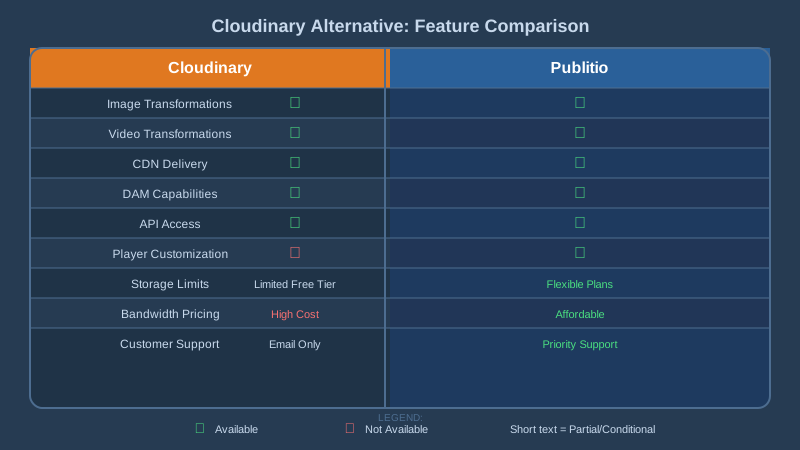
Image Management and Transformations
Both Cloudinary and Publitio offer image upload, storage, and on-the-fly transformations. With Publitio, you can resize, crop, convert formats, apply watermarks, and optimize images through a simple URL-based API. The transformation syntax is developer-friendly and well-documented in the Publitio API docs.
The key difference? Cloudinary's credit system means every transformation counts toward your quota. Publitio's approach is more straightforward — you pay for storage and bandwidth, not for every image operation, making it far more predictable for teams with large media libraries.
Video Hosting and Streaming
This is where Publitio truly shines as a Cloudinary alternative. While Cloudinary offers basic video upload and delivery, it doesn't offer the same depth of video-on-demand features that Publitio does.
With Publitio's video hosting solution, you get:
- Adaptive bitrate HLS streaming for smooth playback on any device or connection speed
- A customizable HTML5 video player that you can embed anywhere
- Video transcoding to multiple formats automatically
- Thumbnail generation and video previews
- Private video hosting with access controls
- Full video-on-demand (VoD) infrastructure ready out of the box
For any team that's serious about video — whether you're a media publisher, an online course creator, or an enterprise sharing internal video content — Publitio's video capabilities make it the clear winner.
DRM and Content Protection
One area where Publitio clearly surpasses Cloudinary is in content security. Publitio offers DRM (Digital Rights Management) and video encryption, allowing you to protect your premium video content from unauthorized access or distribution.
This is critical for industries like e-learning, entertainment, and corporate training — where content is a core business asset. Cloudinary simply doesn't offer this level of content protection. If DRM is a requirement for your project, Publitio is the obvious choice.
Digital Asset Management
Publitio's DAM solution is built for teams that manage large libraries of images, videos, documents, and other media files. You get:
- Intuitive folder hierarchies and file organization
- Custom metadata and tagging for easy search and retrieval
- Team collaboration with access controls and permissions
- Version history and file management
- Bulk upload and management tools
For marketing teams, creative agencies, and content operations, this is exactly the kind of structure that makes daily work manageable. Cloudinary offers some DAM-like features, but they often feel bolted on rather than central to the experience.
CDN Delivery
Both platforms use global CDN infrastructure to deliver media quickly. Publitio's CDN is built to serve files with low latency to users around the world, ensuring fast page loads and smooth video playback. This is baked into every plan — not an add-on.
API and Developer Experience
Publitio was built API-first. The developer documentation is clean, comprehensive, and includes SDKs and code examples to help you get integrated quickly. Whether you're building a custom CMS, a media-heavy web app, or a mobile application, the Publitio API gives you full control over your media programmatically.
Upload files, retrieve URLs, apply transformations, manage folders, and control access — all through a RESTful API with clear endpoints and consistent responses. Developers who've worked with Cloudinary's SDK will find the transition to Publitio smooth and even refreshing.
WordPress Integration
For teams running WordPress, Publitio offers a dedicated media offload plugin that automatically stores your media files in the Publitio cloud and serves them via CDN. This keeps your WordPress server lean, speeds up your site, and gives you a centralized media library outside of WordPress — without changing your publishing workflow.
This is a feature Cloudinary also offers, but Publitio's plugin is lightweight, well-supported, and doesn't require a premium plan to use effectively.
Pricing: Where Publitio Wins Every Time
Let's talk about the elephant in the room: cost.
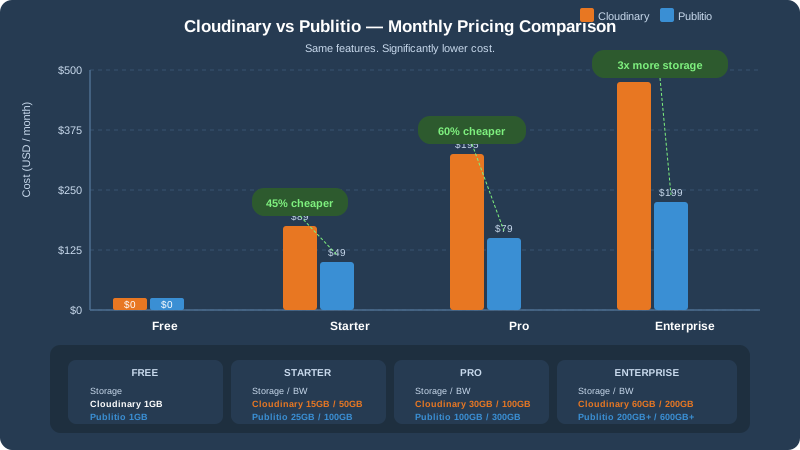
Cloudinary's pricing model is notoriously difficult to predict. It's based on a credit system where different operations — transformations, storage, bandwidth — all consume credits at different rates. Many teams find themselves on far higher plans than expected because a spike in traffic or a batch of image transformations depleted their credits.
Publitio takes a different approach. Publitio's pricing plans are based on storage and bandwidth — the two things you can actually plan for. There are no surprise transformation charges, no opaque credit systems, and no hidden fees. You know exactly what you're paying and what you're getting.
Plans start affordably for individual developers and small teams, with scalable options for growing businesses and enterprises. There's even a free tier to help you get started and explore the platform before committing.
For startups watching their burn rate and enterprises managing large procurement processes, Publitio's predictable pricing is a significant advantage over Cloudinary's model.
Who Should Consider Switching to Publitio?
Publitio is an excellent Cloudinary alternative for a wide range of users. Here's a quick breakdown of who benefits most:
Developers and Engineering Teams
If you need a clean API, good documentation, and a platform that doesn't get in your way, Publitio is designed for you. The API-first architecture means you can build exactly the media pipeline you need — without conforming to a rigid platform structure. Check out the API documentation to see how straightforward integration can be.
Media Companies and Publishers
For organizations that publish a lot of video content, Publitio's video hosting and VoD capabilities combined with HLS adaptive streaming make it a natural home for your content library. Add DRM protection for premium content, and you have a complete video publishing infrastructure.
E-Learning Platforms
Online course creators and e-learning platforms need secure, reliable video delivery with content protection. Publitio's DRM and encryption features ensure that your course videos stay protected from unauthorized sharing — something Cloudinary simply can't offer at this level.
Marketing and Creative Teams
If your team spends time searching for the right logo version, the approved banner image, or last month's campaign video, a proper digital asset management system will transform your workflow. Publitio's DAM gives teams a single source of truth for all brand and creative assets.
WordPress Site Owners
If you're running a content-heavy WordPress site and want to offload media to the cloud for better performance and lower hosting costs, Publitio's WordPress plugin makes this effortless. Your media is served from the CDN, your server stays fast, and your workflow doesn't change.
Making the Switch: How Easy Is It to Migrate from Cloudinary to Publitio?
One concern people have when switching platforms is migration. How hard is it to move your existing media library?
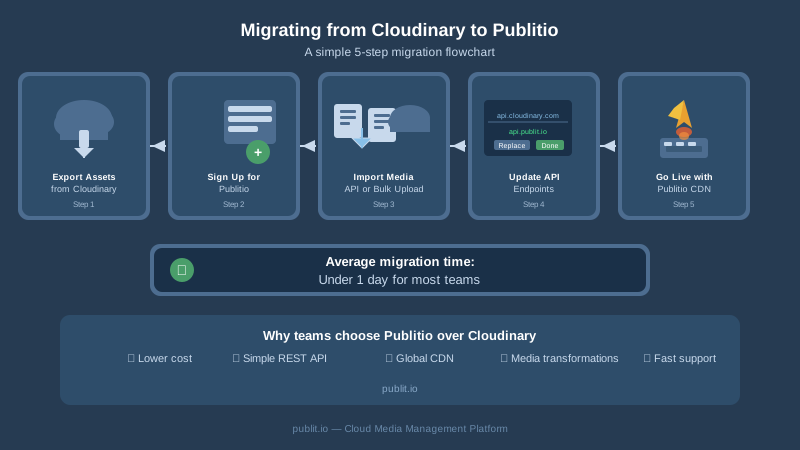
The good news is that Publitio's API makes bulk migration straightforward for developers. You can programmatically upload your existing assets, recreate your folder structure, and update your URLs. The Publitio team also provides support for enterprise migrations, helping larger organizations plan and execute their transition with minimal disruption.
For smaller libraries, the process can be as simple as a few API calls or a batch upload through the dashboard. The documentation walks you through everything you need to get started.
The short version: migrating to Publitio is far less painful than most teams expect, and the long-term benefits make it well worth the effort.
Explore Everything Publitio Has to Offer
Publitio isn't just a one-trick alternative — it's a complete media infrastructure platform. Here's a summary of everything you get when you choose Publitio:
- Digital Asset Management: Organize, tag, and retrieve all your media assets in one place
- Video Hosting & VoD: Host and stream professional video content with adaptive HLS
- DRM & Encryption: Protect your premium video content from unauthorized access
- Global CDN: Fast media delivery to users anywhere in the world
- Developer API: Full programmatic control over your media pipeline
- Image Management: Upload, transform, optimize, and deliver images at scale
- WordPress Plugin: Offload media to the cloud effortlessly
- All Features: See the full capabilities of the platform
The Bottom Line: Is Publitio the Right Cloudinary Alternative for You?
If you're paying too much for Cloudinary, frustrated by its video limitations, or simply looking for a platform that gives you more control with less complexity, Publitio is the answer. It combines the developer-friendly API experience you need with the media management, video hosting, and content protection features that modern businesses demand — all at a price that makes sense.
In 2025, there's no reason to stay locked into a platform that doesn't serve your needs. Publitio has everything Cloudinary has — and in many areas, considerably more.
Ready to see for yourself? Sign up for free at publit.io and start exploring what Publitio can do for your media workflow. Whether you're a solo developer building your first app or a media team managing thousands of assets, Publitio is built to grow with you. Get started today — no credit card required — and discover why so many teams are making the switch.


