


What Is Media Asset Management? A Complete Guide for 2026
If you've ever struggled to locate a specific video file buried in a maze of folders, waited too long to deliver media to a client, or lost track of which version of an asset is the latest approved one, you already understand the core problem that media asset management solves. In 2026, as organizations produce more video, audio, and rich media content than ever before, having a structured system to store, organize, retrieve, and distribute those assets isn't a luxury — it's a competitive necessity. This guide breaks down exactly what media asset management is, how it works, why it matters, and how to choose the right solution for your team.
What Is Media Asset Management (MAM)?
Media asset management (MAM) refers to the systems, processes, and software used to ingest, catalog, store, manage, and distribute rich media files — primarily video, audio, and images. Unlike general file storage, a MAM solution understands the unique structure of media files: their formats, codecs, framerates, bitrates, metadata schemas, and licensing constraints.
At its core, a MAM platform gives creative and technical teams a single source of truth for all media content. Every file is cataloged with descriptive, technical, and rights-related metadata. Workflows for review, approval, and distribution are built in. Delivery mechanisms — often including a global CDN — are tightly integrated so that moving an asset from storage to an end viewer is fast and secure.
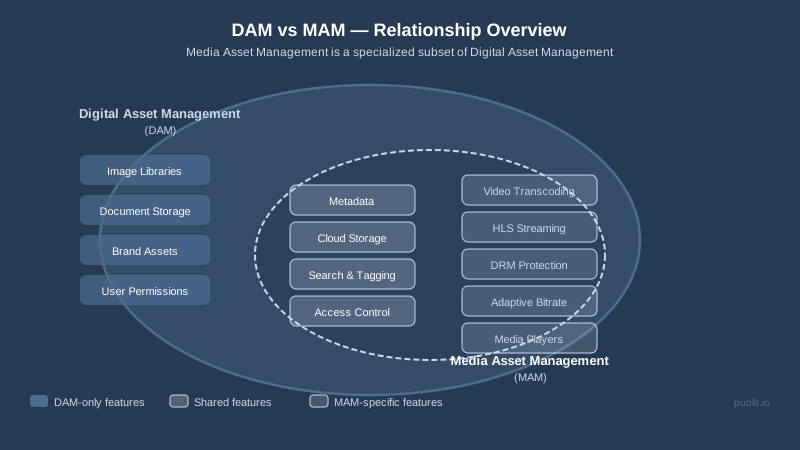
The term is often used interchangeably with Digital Asset Management (DAM), but the two are subtly different. DAM is the broader category covering all types of digital files (documents, graphics, brand assets, presentations). MAM is a specialized subset with deeper capabilities for large binary media files, transcoding pipelines, streaming protocols, and broadcast-grade workflows. Many modern platforms, including Publitio, bridge both worlds — offering a unified digital asset management environment with dedicated media handling capabilities.
Key Components of a Media Asset Management System
Understanding what media asset management means in practice requires looking at its building blocks. A mature MAM solution typically includes the following components working together.
Ingest and Upload
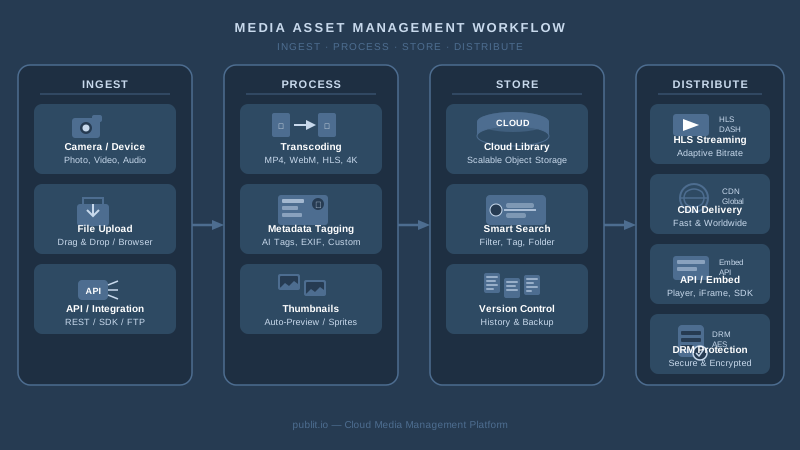
The process starts with getting media into the system. Enterprise MAM platforms support bulk uploads, direct integrations with cameras and editing software, API-driven ingest, and FTP or SFTP pipelines. The moment a file lands in the system, it is automatically fingerprinted, format-detected, and queued for processing.
Transcoding and Format Conversion
Raw media files rarely arrive in a format that's ready for every delivery channel. A built-in video processing engine automatically converts source files into multiple output formats and resolutions — 4K, 1080p, 720p, 480p — so that the right quality is always available for the right device. Modern platforms leverage GPU-accelerated video conversion to dramatically reduce encoding times even for large or complex files.
Metadata Management
Metadata is the backbone of any MAM system. Without rich, structured metadata, finding a specific asset among thousands becomes nearly impossible. MAM platforms support multiple metadata schemas: technical metadata (codec, bitrate, resolution, duration), descriptive metadata (title, description, tags, keywords), administrative metadata (creator, rights owner, expiry date), and structural metadata (episode number, scene, chapter). Many systems now layer in AI-powered auto-tagging to reduce manual entry.
Storage and Organization
Media files are large. A single 4K raw video file can easily exceed 100 GB. MAM platforms are designed for petabyte-scale cloud storage, often with tiered architectures that keep frequently accessed assets on fast storage and archive older content on cheaper infrastructure. Folder structures, collections, and tagging systems make browsing and searching intuitive.
Search and Retrieval
One of the primary return-on-investment drivers for MAM is dramatically reduced time spent searching for files. Full-text search across metadata, visual similarity search, and advanced filtering by format, date, rights status, or custom fields mean that any authorized user can find what they need in seconds rather than hours.
Rights and Access Control
Media assets frequently carry complex rights information — usage windows, territory restrictions, talent releases, licensing agreements. A robust MAM system tracks all of this, warns users when an asset is approaching expiry, and enforces permissions at the user, group, or team level. For video content specifically, digital rights management (DRM) adds a technical enforcement layer on top of policy-based controls.
Distribution and Delivery
Storing assets is only half the equation. Getting them to end users — whether that's embedding a video on a website, streaming to a mobile app, or delivering files to a broadcast partner — requires fast, reliable infrastructure. HLS streaming with adaptive bitrate ensures smooth playback across varying network conditions, while CDN delivery ensures low latency for global audiences.
Media Asset Management vs. Digital Asset Management: What's the Difference?
This is one of the most common questions organizations ask when evaluating platforms. The honest answer is that the line is increasingly blurry, but the distinction matters when scoping your needs.
A traditional DAM system was built around documents, images, logos, and brand materials. It excels at version control, brand portals, and approval workflows for marketing assets. If your primary concern is distributing brand guidelines and static imagery, a DAM is the right tool.
A MAM system, by contrast, is built around the unique demands of video and audio. It handles large binary files efficiently, integrates with editing software, manages complex codec ecosystems, automates transcoding, and supports streaming delivery protocols. If your organization is producing podcasts, training videos, live broadcasts, or video-on-demand libraries, you need MAM capabilities.
The best modern platforms offer both. Publitio's media asset management solution handles video, audio, images, and documents in a single API-first platform — giving creative teams, developers, and operations staff a unified workspace without forcing them into two separate tools.
Who Needs Media Asset Management?
The short answer: any organization that regularly creates, stores, or distributes media at scale. But let's be specific about the verticals and use cases that benefit most.
Media and Entertainment
Broadcasters, streaming platforms, and production houses manage enormous libraries of episodic content, raw footage, and finished deliverables. MAM is central to every aspect of their operations — from ingest off cameras on set, through post-production, to final delivery to platforms and audiences. Video-on-demand (VoD) infrastructure built on top of a MAM layer enables flexible content monetization models.
Marketing and Advertising Agencies
Campaign production generates hundreds of assets per project — video cuts in dozens of formats, static images in multiple sizes, audio spots, and supporting files. Without a MAM, teams waste enormous amounts of time on file hunting, duplication, and version confusion. With one, every stakeholder can access the right asset at the right stage of approval.
Corporate Learning and Development
Organizations with large training libraries need to manage instructional videos, webinar recordings, and course materials at scale. A MAM platform with video hosting, access control, and analytics makes it easy to deliver learning content securely to distributed workforces.
Sports Organizations
Sports teams, leagues, and broadcasters generate massive volumes of match footage, highlight clips, press conference recordings, and athlete imagery. MAM enables fast clipping, metadata tagging, and rights-compliant distribution to media partners and social channels.
Developers and SaaS Companies
API-first MAM platforms empower developers to build media-rich applications without managing their own encoding infrastructure. A free video API lets teams prototype quickly, while a production-grade platform scales alongside them.
Core Benefits of Media Asset Management
Organizations that implement a proper media asset management strategy consistently report measurable improvements across several dimensions.
Faster Content Delivery
Automated transcoding pipelines and integrated CDN delivery collapse the time between "finished file" and "published to audience" from hours to minutes. For news organizations or live event producers, this speed is directly tied to audience engagement and revenue.
Reduced Storage Costs
By eliminating duplicate files, enforcing a single master + derivative model, and using intelligent storage tiering, MAM platforms dramatically reduce the total footprint of a media library. Organizations routinely see 30–50% reductions in storage costs after implementing a MAM.
Improved Collaboration
When everyone works from the same library with the same metadata, version control ceases to be a daily argument. Remote teams, external agencies, and broadcast partners can all access what they need through controlled, permissioned portals without emailing files back and forth.
Rights Compliance
Using an asset outside its licensed window or territory can expose an organization to significant legal liability. MAM systems with rights management baked in automate compliance checks and prevent unauthorized distribution — a safeguard that becomes increasingly important as content libraries grow.
Analytics and Performance Insights
Modern MAM platforms don't just store and deliver — they measure. Built-in analytics surfaces data on which assets are being viewed, where audiences drop off in a video, which content drives conversions, and how delivery is performing across regions. These insights feed directly back into content strategy.
Brand Protection
Features like automated watermarking protect intellectual property during review and distribution workflows, ensuring that unreleased or sensitive content can't easily be repurposed without authorization.
How to Choose a Media Asset Management Platform in 2025
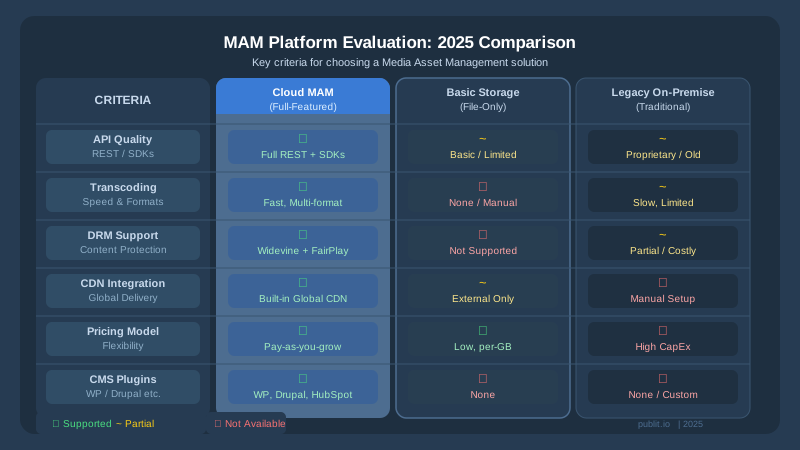
The MAM market has matured significantly, and buyers now have a wide range of options from lightweight cloud tools to enterprise broadcast systems. Here are the most important criteria to evaluate.
Scalability and Storage Architecture
Will the platform still perform well when your library grows from 10,000 to 1,000,000 assets? Ask vendors specifically about their storage architecture, maximum file sizes, and how performance changes at scale.
API-First Design
In 2025, any MAM worth its price tag should offer a comprehensive, well-documented API. Your media management layer should integrate seamlessly with your CMS, your website, your mobile app, and your analytics stack. Check the developer documentation thoroughly before committing — the quality of the docs tells you a lot about the quality of the platform.
Video Processing Capabilities
Look for support for modern formats (H.264, H.265/HEVC, AV1), adaptive bitrate streaming (HLS, MPEG-DASH), and ideally GPU-accelerated transcoding for speed. If you're dealing with large volumes of video, processing speed is a major operational variable.
CMS and Platform Integrations
Many organizations run WordPress as their primary content platform. A WordPress media offloading plugin that automatically serves media from a CDN rather than your origin server can dramatically improve site performance while keeping your WordPress media library intact.
Security and DRM
For premium content or sensitive internal media, encryption and DRM are non-negotiable. Ensure the platform supports token-based URL signing, AES-128 encryption for HLS streams, and established DRM frameworks.
Pricing Transparency
MAM pricing models vary widely — per seat, per GB of storage, per GB of bandwidth, per transaction. Understand the full cost model before signing, especially if you're planning to scale video delivery traffic. Review transparent pricing plans that grow with your actual usage rather than locking you into rigid enterprise contracts.
Image and Audio Handling
Don't overlook non-video assets. A platform with strong image management capabilities — including on-the-fly resizing, format conversion to WebP/AVIF, and responsive image delivery — and dedicated audio management for podcasts and music libraries rounds out a truly unified media stack.
Media Asset Management Best Practices
Deploying a MAM platform is only the beginning. Getting sustained value requires building good habits and workflows around the technology.
Establish a Metadata Standard Before You Begin
The single most impactful thing you can do before migrating assets into a new MAM is to define your metadata schema. Decide what fields are mandatory, what controlled vocabularies you'll use for tags, and how you'll handle legacy assets that lack clean metadata. Retrofitting metadata to a large library is expensive and painful — front-loading this work pays dividends for years.
Implement a Clear Naming Convention
Even with excellent metadata search, consistent file naming conventions reduce confusion and make bulk operations safer. Agree on a convention that includes project, date, version, and format information, and enforce it with upload validation rules where possible.
Define User Roles and Access Policies Early
Not everyone needs write access to the master library. Define roles — contributor, reviewer, approver, distributor, administrator — and map them to real team functions before granting access. This protects asset integrity and simplifies onboarding.
Automate Wherever Possible
The power of a modern MAM comes from automation. Set up rules that automatically generate derivatives when a master is uploaded, trigger approval workflows when an asset reaches a certain status, send rights-expiry notifications before licenses lapse, and push finished assets to delivery channels without manual steps.
Audit and Archive Regularly
Libraries grow quickly. Schedule periodic audits to identify unused assets, duplicate files, and content approaching rights expiry. Archive or delete assets on a defined schedule to keep your active library clean and your storage costs under control.
The Future of Media Asset Management
The trajectory of MAM in 2025 and beyond is shaped by several converging trends. AI and machine learning are automating metadata generation, enabling scene-level video search, and powering smart content recommendations. Edge computing and improved CDN architectures are pushing streaming latency down toward real-time thresholds. The explosion of short-form video content is pressuring MAM platforms to support faster ingest-to-publish pipelines. And tightening content rights environments — driven by regulatory pressure and platform monetization models — are making robust DRM and rights tracking table-stakes features rather than optional add-ons.
Organizations that invest in a scalable, API-driven MAM foundation today will be well-positioned to integrate these emerging capabilities as they mature, rather than scrambling to retrofit them onto fragile legacy workflows.
Start Managing Your Media Assets with Publitio
Publitio is a cloud-based media asset management platform built for developers, creators, and media teams who need a fast, reliable, and developer-friendly way to manage video, audio, and images at scale. With GPU-accelerated transcoding, HLS adaptive streaming, DRM encryption, global CDN delivery, and a fully documented REST API, Publitio gives you everything you need to build a world-class media workflow — without the complexity or cost of stitching together multiple point solutions.
Whether you're a developer building a video-powered application, a marketing team managing a growing creative library, or a media company delivering premium content to global audiences, Publitio has a plan that fits your scale and budget. Ready to see it in action? Sign up for free at publit.io and start uploading your first assets in minutes — no credit card required.


